Lord’s Word - KJV Bible Puzzle
- 4.9
- Rating
- 50.00K
- Installs
- Free
- Price
 Analysis by App-foxy
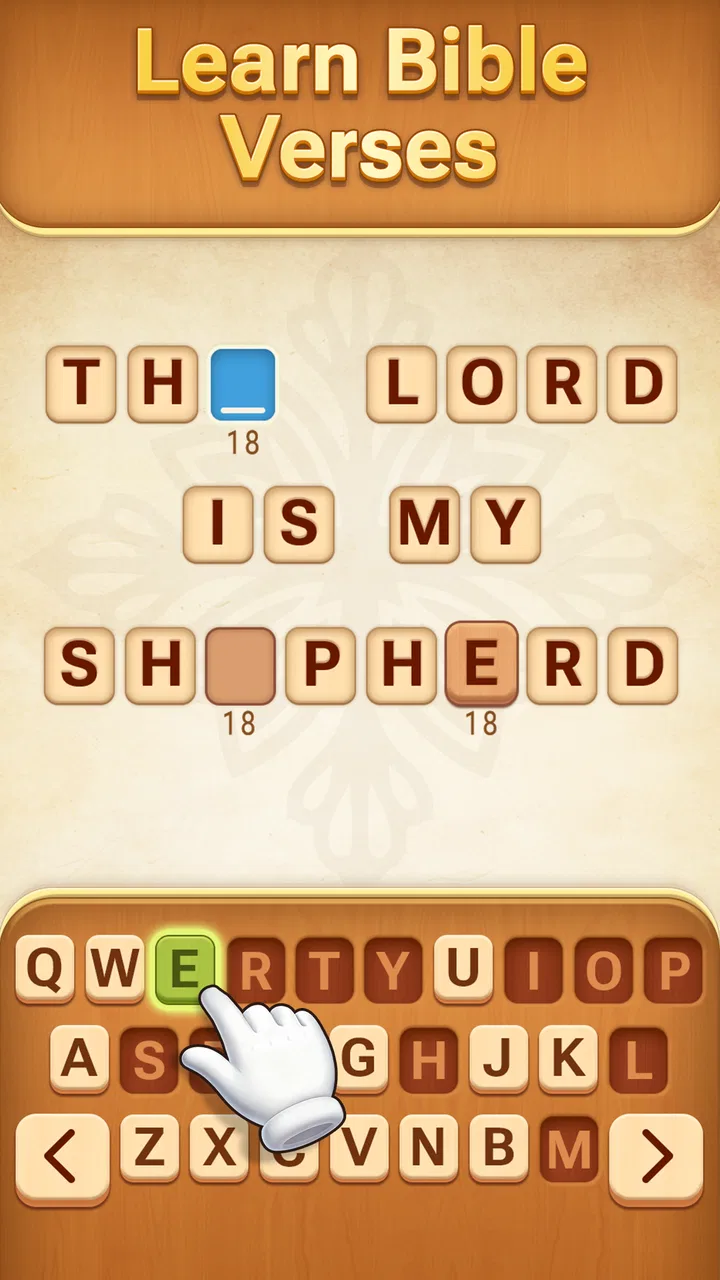
I opened Lord’s Word expecting a small Bible-themed word game, and that is exactly where its appeal begins. It does not ask me to learn a complicated control scheme or manage a large collection of systems. Its central idea is clear: decode verses from the King James Version through puzzles, turning familiar scripture into a quiet word-solving activity. That makes it easy to understand within a few moments, but the simplicity also means the quality of each puzzle and the mood around it matter more than they would in a larger game.
Created by Sophun Games Limited, this free word game is aimed at people who want a short, faith-oriented challenge rather than a conventional action or strategy experience. I found it most suitable for calm sessions: a few minutes during a break, a reflective moment before bed, or a shared activity with someone who already enjoys reading the Bible. The Everyone age rating also makes its subject approachable for a broad audience, although the use of the KJV means the language may feel old-fashioned to players who normally read a modern translation.
The first practical detail is that it is available for Android devices running at least Android 8.1. The current version is 1.7.0, and the game is free to install, with optional in-app purchases ranging from $3.49 to $9.99 per item. I appreciate being able to try the core idea without paying first, but anyone who prefers a completely purchase-free experience should keep those optional costs in mind before settling into a long-term routine.
You May Also Like

 Blood Strike: 2.5 Anniversary
Blood Strike’s Loadouts Turn Every Drop Into a Tactical Gamble
A close look at Blood Strike’s custom loadouts: how fast access to signature weapons reshapes its battle royale rhythm, rewards preparation, and narrows the gap between fights.

 Pandora - Music & Podcasts
Pandora’s Music Is Easy to Start, but Harder to Recover
Pandora’s strength is its low-effort path from a seed to a station. Its weak spot is how much confidence it asks you to place in connection, setup, and quiet recovery.

 8 Ball Pool
 Is Built on Rivalries, Rematches, and Routine
A close look at the rivalries, rematches, shared routines, and unanswered safety questions that turn a quick pool match into a persistent mobile community.

 Samsung Music
’s Quiet Strength Is Playing What You Already Own
Its reach comes less from spectacle than from dependable access to a personal library. That simplicity is both the app’s strongest retention engine and its ceiling.

 AccuWeather: Weather Radar
AccuWeather Review: A Quick, Clear Forecast for Everyday Decisions
For everyday plans, the best forecast is the one you can understand quickly. AccuWeather makes rain timing, radar, and local conditions easy to act on, with a few trade-offs.

 Hill Climb Racing
Why Hill Climb Racing Still Turns Crashes Into One More Run
A tiny car, a bumpy hill and one more upgrade: Hill Climb Racing keeps resurfacing because its simple chaos makes every near-miss feel personal.
More From Our News Desk
View All News


A quiet first impression built around scripture
My first impression was shaped less by spectacle and more by the decision to make the verse itself the main attraction. In many word games, the words are simply raw material for points, streaks, or a leaderboard. Here, the text carries meaning before it becomes a puzzle. That changes the pace of play: I am not only looking for a correct answer, but also encountering a line of scripture that may invite a second reading.
This approach gives the game a focused identity. It is not trying to compete with a general crossword collection by offering every possible puzzle format. Instead, it uses the KJV as its setting and its content. That is a smart fit for players who already enjoy biblical study and want something more interactive than simply scrolling through verses. It is also a useful entry point for someone who finds a full reading session intimidating but is comfortable beginning with a small challenge.
The trade-off is that the experience depends heavily on personal interest. If biblical text is not something you want at the center of a game, the theme will not feel like decoration you can ignore. The words are the reason to play, so a player looking for a purely secular word workout would probably be happier with a crossword, an anagram app, or a daily word guessing game.
The game’s popularity suggests that this focused concept has found an audience. It has passed over 50 thousand installs, carries an average rating of 4.9 from around 4.9 thousand ratings, and has 417 written reviews. Those figures do not replace personal testing, but they do help explain why the game stands out in a crowded word category: it serves a clearly defined interest instead of trying to be everything at once.
Who gets the most from the format
I would recommend it first to players who know at least some biblical vocabulary, enjoy the cadence of the KJV, or want a gentle way to revisit passages they may already recognize. Familiarity can make the puzzles more satisfying because a remembered phrase may suddenly provide the missing clue. At the same time, a newcomer does not need to be a Bible scholar to understand the basic objective. The puzzle structure gives the reading a purpose, and that can make individual verses easier to notice.
It also works well as a shared, low-pressure activity. I can imagine two family members taking turns solving a verse, discussing a word that seems unfamiliar, and then talking about the passage itself. That is a different kind of social play from competing over a score. The game becomes a prompt for conversation, especially when one person recognizes the wording and the other is encountering it for the first time.
I would skip it if I wanted a deep educational Bible study tool, a searchable reference library, or detailed historical context for every passage. A puzzle can encourage attention, but it is not a substitute for commentary, structured study, or a complete reading plan. It is better understood as a playful companion to those activities, not a replacement for them.
How the visual and textual world supports the mood
With a verse-decoding game, the “world” is created through language rather than a large map or cast of characters. The KJV gives the experience a distinctive voice: formal, rhythmic, and sometimes unfamiliar. That language can make even a short puzzle feel more ceremonial than an ordinary word challenge. I found that the wording encourages slower reading, which suits the game’s reflective purpose.
There is an important design tension here. The same archaic phrasing that gives the game personality can also create difficulty unrelated to word skill. A player may understand the puzzle but hesitate because a word is rarely used in modern conversation. That is not necessarily a flaw; it is part of working with the KJV. Still, it means the challenge can test biblical vocabulary and historical English at the same time. Players who prefer plain contemporary wording may find the experience less immediately accessible.
The strongest artistic choice is the restraint of letting scripture remain central. A busy interface, excessive effects, or an aggressive reward structure could easily undermine the subject. A calmer presentation is a better match because it gives the player room to read rather than pushing every moment toward speed. In my view, this is where the game’s identity becomes coherent: the puzzle is not detached from the theme, and the theme is not merely pasted onto a generic word board.
That coherence also affects replay value. In a typical word game, I may return because I want to beat a previous score or maintain a daily habit. Here, the reason to return can be more personal. I might want another short passage, a fresh reminder of a familiar idea, or a simple activity that feels more meaningful than filling spare time with random letters. The appeal is quieter, but it can last if the player connects with the material.
Reading the KJV without turning the game into homework
One useful way to approach the game is to treat each puzzle as a two-step activity. First, solve it as a word challenge without overthinking the wider message. Then pause briefly and read the completed verse as a sentence. That small change in habit prevents the mechanics from swallowing the content. It also helps when an unfamiliar phrase initially feels confusing: seeing the full line often makes the wording easier to understand.
I would not rush through the puzzles simply to clear them. The KJV’s rhythm is part of the experience, and speed can make it feel like a list of disconnected answers. A slower approach is especially helpful for younger players or anyone using the game as a gentle introduction to scripture. The game’s strength is not that it compresses Bible reading into a score; it is that it gives reading a small interactive doorway.
There is also a practical trade-off for group use. A knowledgeable player may solve a verse quickly, leaving others with little to do, while a newcomer may need more time with the wording. Taking turns, explaining unfamiliar terms, and discussing why an answer fits can make the session more inclusive. Without that adjustment, the strongest solver may turn a shared activity into a demonstration rather than a conversation.
Sound, rhythm, and the pace of a reflective session
Sound is especially important in a game with a devotional atmosphere, even when the mechanics are simple. A loud, frantic audio style would send the wrong message, while a restrained approach can help the player remain focused on the text. The game’s overall concept calls for a gentle rhythm: read, think, solve, and move on. That pacing is more valuable here than constant stimulation.
I prefer using this kind of game in short sessions rather than treating it like an endless arcade title. A brief play period gives each puzzle room to breathe and makes the activity feel intentional. It also reduces the risk of the verses becoming background noise. If I were playing while distracted by several other apps or rushing between tasks, I would lose much of what makes the theme distinctive.
The slower rhythm has a downside for players who need immediate variety. Someone accustomed to rapid rounds, escalating difficulty, or constant visual rewards may find the experience too modest. The game’s atmosphere is designed around attention, not adrenaline. That is a worthwhile choice, but it narrows the audience. I would choose a conventional word game when I wanted energetic competition or a more demanding test of speed.
A useful everyday scenario is a short evening session after putting away a phone’s more distracting entertainment. I could solve one puzzle, read the completed verse, and stop without feeling that I had abandoned a long campaign. That sense of a natural stopping point is one of the format’s quiet strengths. It fits into a routine without demanding that the routine revolve around the game.
Why pacing matters more than a large feature list
Because the premise is so focused, every interruption would matter. If the player is constantly pulled away from the verse by unnecessary complexity, the atmosphere would weaken. The best way to use the game is therefore to accept its narrow scope. It is not a toolbox of Bible utilities; it is a puzzle experience whose rhythm depends on the relationship between a clue and a completed passage.
This also affects expectations about progression. I would not approach it expecting the layered systems of a role-playing game or the strategic depth of a competitive word battler. Its satisfaction comes from recognition and completion. A difficult phrase becomes manageable, a missing word falls into place, and the finished verse provides a small sense of closure. That is enough for the intended mood, but not enough for every kind of player.
Where the puzzle mechanics fit—and where they do not
The core mechanic is a natural match for the subject because decoding requires close attention to wording. The player is encouraged to inspect spelling, phrase structure, and context rather than simply tap through a Bible passage. That makes the interaction feel connected to the material. The puzzle is not an unrelated minigame placed beside scripture; it asks the player to work with the text directly.
One of the less obvious strengths is the way the format can expose gaps in vocabulary without making them feel like a formal lesson. I may know the general meaning of a verse but still stumble over a particular word. Solving the puzzle highlights that word, and the act of reconstructing the sentence gives it a memorable place in context. This is more useful than memorizing isolated definitions, although it remains informal learning rather than a complete language course.
The main limitation is that puzzle difficulty and spiritual depth are not the same thing. A challenging phrase may require careful decoding, but that does not automatically make the passage more meaningful. Likewise, an easy puzzle can still lead to a valuable reading. I would judge the game by whether it helps me engage with the verse, not by assuming that harder levels are necessarily better or more profound.
Players should also consider the translation before installing. The KJV is not interchangeable with modern Bible versions. Its vocabulary and sentence structure are part of the challenge, and that can be rewarding for readers who appreciate its traditional style. For someone who wants contemporary language, a Bible app with multiple translations would be a better primary tool, while this game could still work as an occasional change of pace if the older wording is not frustrating.
Free access, optional spending, and practical expectations
The free entry point is a clear advantage. I can test whether the puzzle format and translation suit me before spending anything. The optional purchases, priced from $3.49 to $9.99 per item, make it sensible to decide first whether I enjoy the basic loop. I would not buy anything simply because I felt pressured to continue; the value depends on how often I return and whether the extra content improves my personal routine.
For parents or households sharing a device, the Everyone rating makes the subject broadly approachable, but the payment side still deserves ordinary caution. A child may understand the puzzles while not understanding that optional items cost real money. I would set expectations before handing over the device, particularly during a group session where several people may be taking turns.
The game’s technical requirement is modest enough for devices using Android 8.1 or newer, which helps it fit into an everyday mobile setup rather than demanding a recent flagship phone. That matters for a simple word game: the experience should feel available and convenient, not like a reason to replace hardware. I would still keep the app updated to version 1.7.0 when possible, since current versions are generally the sensible starting point for a smoother experience.
My atmosphere verdict after weighing the whole experience
Lord’s Word - KJV Bible Puzzle succeeds because its mechanics, subject, and intended pace point in the same direction. The verse is the setting, the language is the texture, and the puzzle is the way the player enters that setting. I like that it does not need a dramatic fictional world to create a recognizable mood. The KJV supplies a strong voice, while the word-game structure gives the player a reason to slow down and interact with it.
It is not the right choice for everyone. I would steer away from it if I wanted fast competitive rounds, broad word-game variety, modern Bible translations, or detailed study references. I would also avoid expecting a long-form adventure with elaborate progression. Those needs are better served by a dedicated crossword game, a contemporary Bible reader, or a study app built around notes and commentary.
For the right player, though, the limitations are part of the appeal. The narrow focus keeps the experience recognizable, and the modest pacing makes it easy to fit into a daily routine. I can imagine using it as a short morning exercise, a family conversation starter, or a calmer alternative to opening another endlessly scrolling app. The best results come when I allow the completed verse a moment of attention instead of treating it as merely the answer screen.
My recommendation is therefore specific rather than universal: try it if you want a free, faith-centered word game that uses KJV scripture as its actual material, not just as a decorative theme. Give the wording time, expect some vocabulary friction, and decide whether the quiet rhythm suits you before considering optional purchases. With that expectation, this game offers a coherent and approachable way to combine puzzle solving with Bible reading.
FAQs for Lord’s Word - KJV Bible Puzzle
01What is Lord’s Word - KJV Bible Puzzle about?
Lord’s Word - KJV Bible Puzzle combines the spiritual depth of the King James Version Bible with engaging puzzle gameplay. It allows users to deepen their understanding of biblical verses through interactive puzzles. The app transforms learning scripture into a fun and challenging experience, making it ideal for both Bible study enthusiasts and puzzle lovers.
02Is Lord’s Word - KJV Bible Puzzle suitable for all ages?
Yes, the app is designed to be family-friendly and suitable for all ages. The puzzles range from easy to challenging, catering to both younger users and adults. This makes it a great tool for family Bible study sessions, as well as individual play, fostering both learning and entertainment.
03Does the app require an internet connection to work?
No, Lord’s Word - KJV Bible Puzzle can be played offline. Once downloaded, users can access the puzzles and scripture without needing an internet connection. This feature is particularly useful for those who wish to use the app during travel or in areas with limited connectivity.
04Are there any in-app purchases or ads in Lord’s Word - KJV Bible Puzzle?
The app offers a free version with ads and optional in-app purchases to enhance gameplay. Users can purchase additional puzzle packs or remove ads for a more seamless experience. These options allow users to customize their experience according to their preferences and budget.
05How does Lord’s Word - KJV Bible Puzzle benefit Bible study?
The app enhances Bible study by providing a unique, interactive way to engage with scripture. By solving puzzles, users are encouraged to read and reflect on verses, improving retention and understanding. This interactive approach makes scripture study more dynamic and intriguing, appealing to a wide range of users.
Pros
- Engaging puzzle gameplay with biblical themes.
- Smooth and intuitive user interface.
- Offline mode available for uninterrupted play.
- Regular updates with new puzzles and features.
- Supports multiple languages for diverse users.
Cons
- Limited hints can be frustrating for beginners.
- In-app purchases can be pricey for some users.
- Ads can disrupt gameplay if not removed.
- Requires frequent updates for best performance.
- Some puzzles may feel repetitive over time.

Lord’s Word - KJV Bible Puzzle
Gallery